
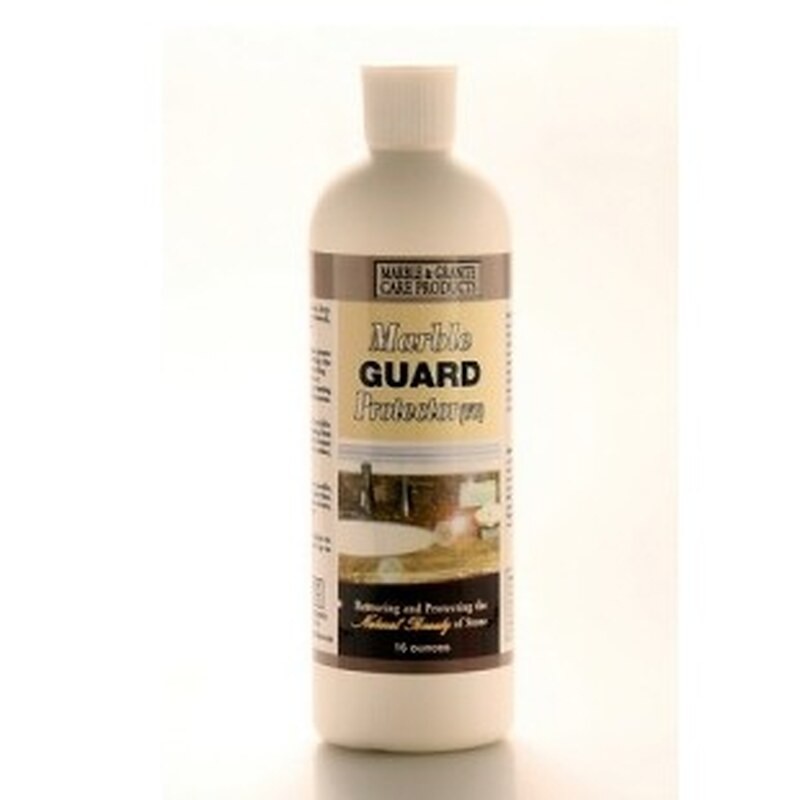
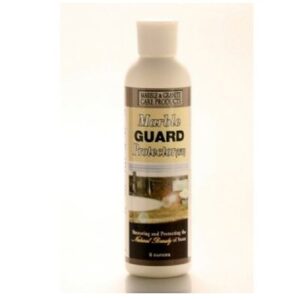
Water base marble sealer in the 16 ounce size – Marble Guard Protector, the low odor formula. A penetrating sealer that soaks into the stone rather than sitting on top of it.
Use the 16 ounce Marble Guard Protector to seal marble. This water-based marble sealant also works as a granite sealer, or for protecting against stains on limestone, travertine, terrazzo, and other natural stones.
Marble Guard Protector WB works best on unpolished marble, such as, honed finished and tumbled finished (textured) marble. Marble Guard Protector SB (solvent base) works best on polished marble (shiny, high gloss finish); Marble Guard Protector SB penetrates deeper into the pores of polished marble than Marble Guard Protector WB.
Product Facts
Marble Guard Protector (Water Based) – 16 Ounce Size
 Now you can you can use a marble sealer the Pro’s use.
Your finest 5-star hotels, professional marble cleaners, home builders, general contractors, tile and stone installers, for their marble care use Marble Guard Protector (WB) routinely, to seal marble.
This marble sealing product works great as a granite sealer, or even for sealing limestone, travertine, terrazzo, other natural stones, brick, and terra cotta.
Marble Guard Protector is quick and easy to use, is unsurpassed for performance and durability, and economical to use – 16 ounces of this marble sealant seals up to 400 square feet of marble.
Why marble needs sealing, and what sealing does not do
Marble looks solid but it is porous. Oils, wine, coffee, cooking splatter and anything pigmented soak into the pore structure and become stains that no amount of surface cleaning will lift. A penetrating water base marble sealer fills that pore structure so spills sit on top long enough for you to notice them and wipe them away. The Natural Stone Institute covers the same principle in its consumer stone care guidance.
Be clear about the limit, because it is the source of most disappointment: a water base marble sealer does not stop etching. Etching is acid chemically damaging the polished surface, and nothing prevents it on calcium carbonate. Sealing is about stains. Etch marks are repaired by polishing – see Marble Gloss Restorer.
Water base or solvent base: which to buy
Water carriers are lower odor and far more pleasant to work with indoors, which is why this is the version most homeowners choose for kitchens and bathrooms. Solvent base versions penetrate very dense, tight stone a little more readily and are the better pick for exterior or high traffic work. Both leave the same kind of invisible penetrating protection, so for a normal domestic surface the water base is the easier route to the same result.
Which size do you need?
The 16 ounce bottle is the middle size and the one most homeowners choose: enough for a bathroom, a vanity run or a marble shower, with material left for a touch up next year. Step up to 40 oz for a kitchen, a marble floor or a whole house, and down to 8 oz for a single small surface.
How to apply a water base marble sealer
The surface must be clean, completely dry and free of any old coating. Clean it first with NeutraSheen for Marble and give it real drying time, because sealing a damp or dirty surface traps the problem underneath and the only remedy is to start again.
Apply evenly, let it dwell so it can penetrate, then wipe away every trace of excess before it dries. Excess left to dry on the surface is the most common mistake and leaves a hazy film. Test an inconspicuous area first, and let the sealer cure before putting the surface back into heavy use.
Knowing when to re-seal
The water test settles it. Put a few drops on the surface and leave them a few minutes. If the stone darkens underneath, it is absorbing and it is due. Most kitchens want a water base marble sealer applied once a year; a busy island or the area beside a cooktop may want it sooner, and guest bathrooms often go years.
If something has already stained, sealing over it locks it in. Draw the stain out first, let the stone dry fully, then seal.
Water base marble sealer questions we get asked
Will it change how the stone looks? A penetrating sealer is meant to be invisible and should not alter color or gloss.
Does it work on other stone? Yes – it also works as a granite sealer and on limestone and travertine.
Will it stop etch marks? No. Nothing prevents acid etching on marble. Sealing protects against staining.
Can I still use my normal cleaner? Use a pH neutral one. Acidic and bleach based cleaners strip sealer and shorten its life considerably.


Reviews
There are no reviews yet