

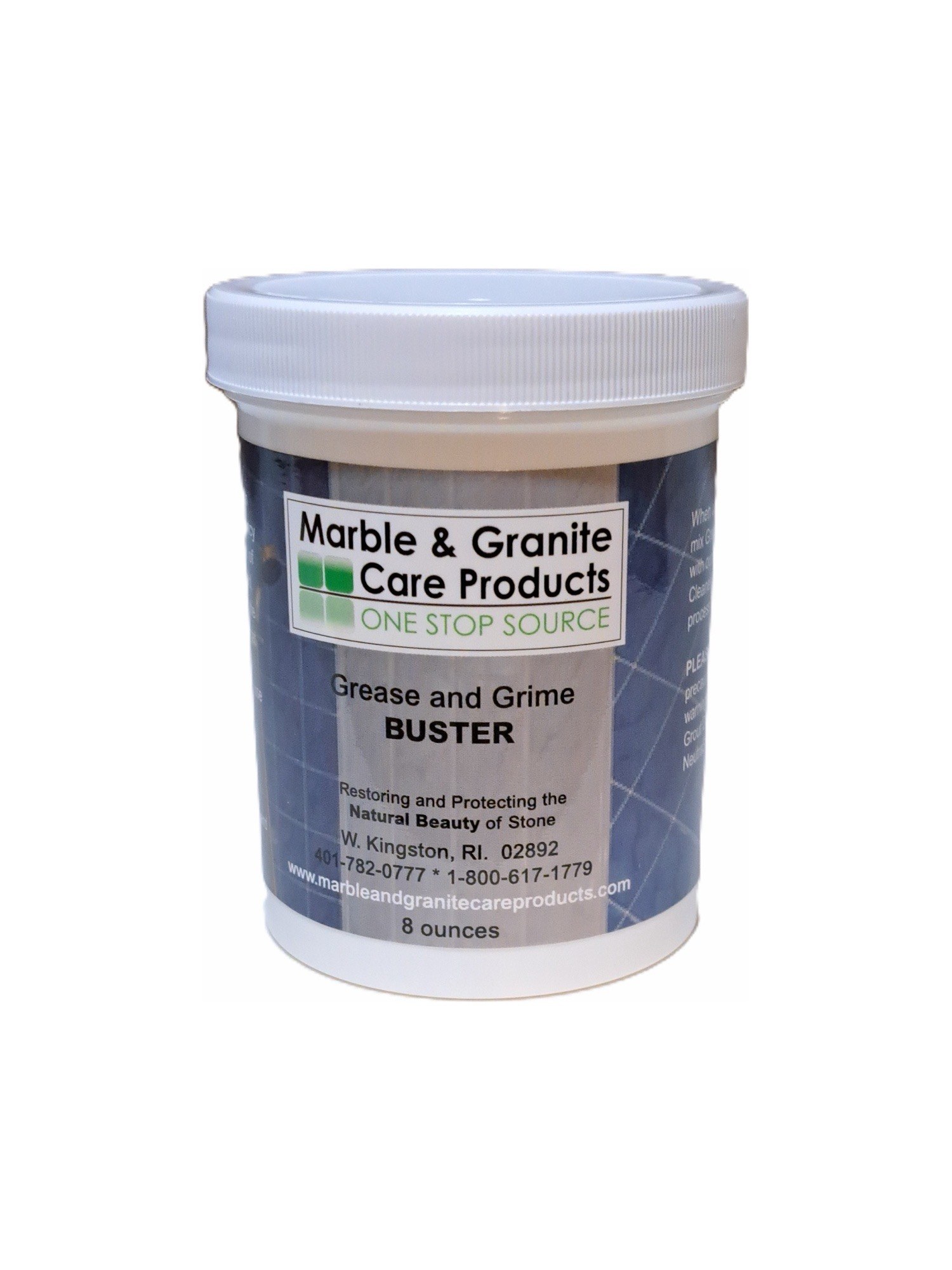
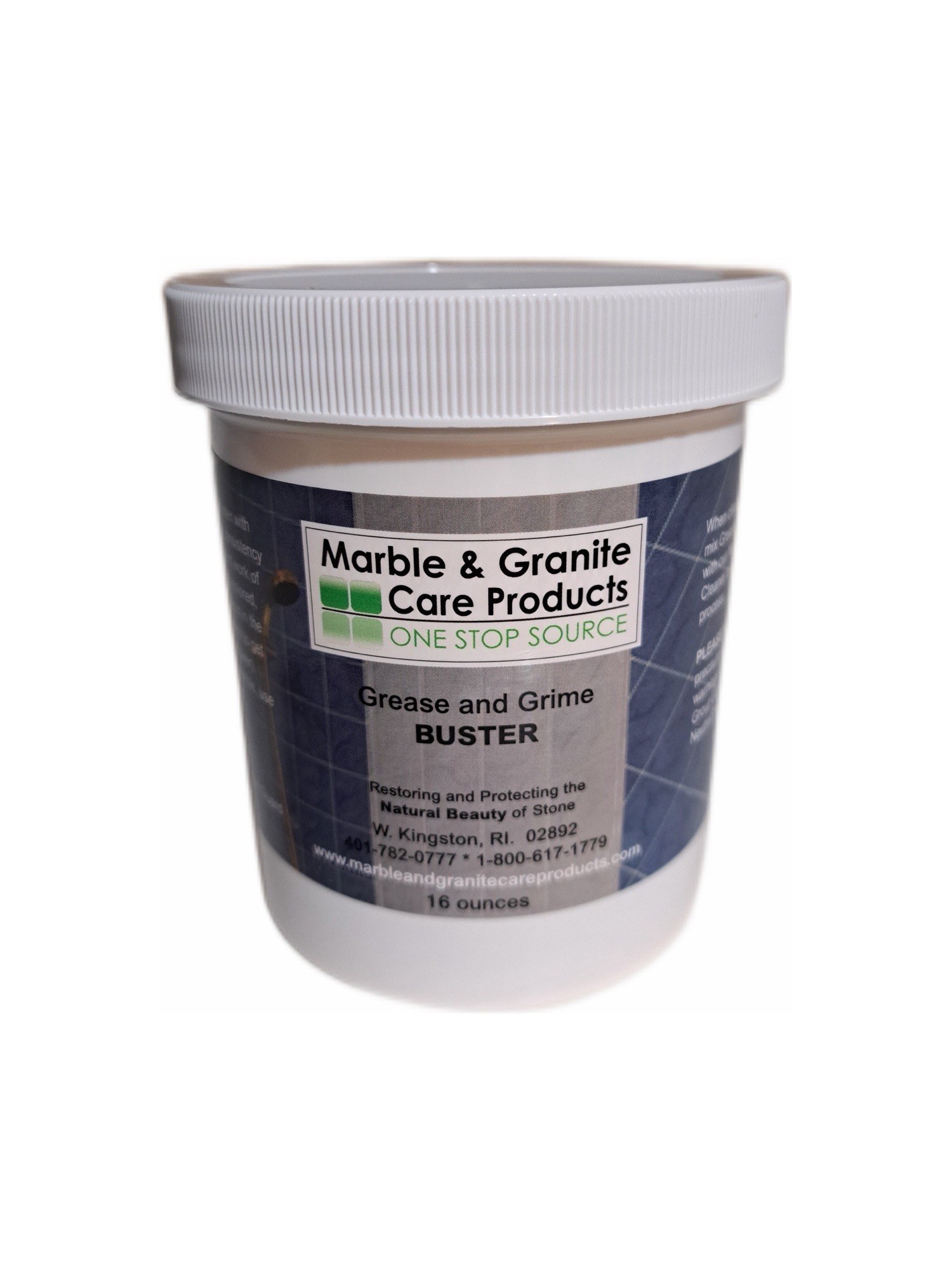
Grease and Grime Buster – a special blend of fine abrasives that works with Grout Guard Restorer to shift the grease and soil that ordinary cleaners leave behind.
Product Facts
A special blend of fine abrasives, when combined with Grout Guard Restorer, will make short work of those really really dirty, discolored, caked up areas of your grout.
Useful for aiding the grout cleaner when cleaning grout in the kitchen and bathroom; works great on removing mildew in the shower.
Why grease on tile and grout needs an abrasive
Kitchen grease is not like other soil. It is not water soluble, it does not rinse, and it builds up in a film that traps everything else – dust, food, smoke residue – into a layer that gets darker and more stubborn every month. Spray cleaners smear it around. Steam softens it and then it re-sets. What actually removes it is mechanical: a fine abrasive that lifts the film off the surface without cutting into the tile or the grout underneath.
That is what the grease and grime buster is. The abrasive is deliberately fine, because the point is to remove the film rather than to sand the surface. Used with Grout Guard Restorer, the two work together: the restorer breaks down the soil, the grease and grime buster carries it off.
Where the grease and grime buster earns its place
- The tile and grout behind and beside a cooktop
- Kitchen backsplashes that have gone yellow rather than dirty
- Extractor hood surrounds and the wall above them
- Grout lines on a kitchen floor that no longer come clean
- Commercial kitchens, bar backs and food prep areas
Which size to choose
- 8 oz – the smaller size, for a single room or a first try alongside the Grout Guard Restorer.
- 16 oz – handles a large kitchen with material left over, and is the size to pick if floors are in scope as well as walls.
How to use it
Work a small area at a time rather than covering a whole wall at once, and keep the surface wet while you work. Let the product and the abrasive do the job instead of leaning on it – pressure is not what makes this work, contact and patience are. Rinse thoroughly afterwards so nothing is left behind on the surface.
Always test an inconspicuous corner first, particularly on a finish you are unsure about. And note that this is for hard tile and cement grout: on marble, limestone or travertine, use our marble specific range instead, because soft stone needs different handling.
Finish the job properly
Once grout is genuinely clean, seal it. Cement grout is porous, which is why it took on the grease in the first place, and sealing is what stops the whole cycle starting again. Clean grout that is left unsealed will look the same again within a year.
After that, routine cleaning with a pH neutral cleaner keeps it there. Harsh supermarket degreasers strip sealer and put you back at the beginning. The Natural Stone Institute makes the same recommendation about neutral cleaners in its consumer care guidance.
Grease and grime buster questions we get asked
Will it scratch my tile? The abrasive is fine and designed for the job, but test an inconspicuous area first.
Can I use it on marble? No. Marble and other soft stone need our marble range.
Do I need the Grout Guard Restorer as well? They are designed to work together and the results are considerably better as a pair.
Which size should I buy? A little goes a long way. The 16 ounce size handles a large kitchen with material left over; the 8 ounce size is there for smaller jobs.
| Size | 8 oz, 16 oz |
|---|
Only logged in customers who have purchased this product may leave a review.
You may also like…
-
Grout Cleaner / Restorer
Grout Guard Restorer
Price range: $29.95 through $79.95 Select options This product has multiple variants. The options may be chosen on the product page



Reviews
There are no reviews yet